With early civilizations likes of Egypt
and Mesopotamia, a civilization flourished in South Asia. Today it’s
known as Indus Vally Civilization/Harappan civilization.
Is Indus Valley civilization and Harappan Civilization same?
Harappa (now in Pakistan) is the first major city and first representative of this civilization. Hence, sometimes Indus Vally Civilization also called Harappan Civilization.
How did the Indus Valley Civilization start?
This
civilization stretched around the Indus river valley and regions of
western India in Indian subcontinent. Trade and farming suggested a
peaceful coexistence and common practices played a vital part, in its
development and sustainability. The civilizations growth took place
around 3000 BCE. Which give it a place in the world’s earliest
civilizations. The reliable water supply and location is the main reason
for the gradual rise of this culture.
Importance of Indus river
The rivers proved extremely useful for ancient civilizations. They
provided a great source of fresh water and an area to hunt and gather
food. When rivers flooded, it left behind nutrient-rich silt which, is
great for agriculture. Just like the Nile in Egypt, the Indus river’s
annual flooding allowed, the growing of crops in mass quantities.
Hence, it was enough to feed a growing population. These rivers were
beneficial for goods transportation and migrations of people. Rivers
ultimately meets the seas, Hence they also proved as a “get way” for
foreign trade.
The Indus Valley Civilization had begun as simple farming villages
and later developed into advanced urban centers with well-developed City
structures. These developments aided to the rise in population as well
as the adoption of economic activities, such as trade which further
aided to the growth of these cities. By 2600 BCE, the Indus Valley
Civilization was flourishing. What we know about about the Indus Valley
Civilization only comes from archaeology; it remains..
the largest ancient civilization discovered with over 1500 sites.
A hieroglyphics like system of writing has been discovered, but it
remains an unsolved mystery as linguistics historians still
baffled about the writing system. However, we can paint a picture
through archaeological artifacts of what life might have been like on
those days.
Who discovered Indus Valley civilization?
The Indus Valley Civilization revolved around two major
cities; Harappa and Mohenjo Daro. First major excavation was carried out at Harappa in 1921 by an Indian archeologist named Daya Ram Sahni. But, The first evidence were found by
Charles Masson; first European to discover the ruins of Harappa.
Large-scale excavations were carried out at the cities of Mohenjo Daro
and Harappa under the direction of John Marshall and Ernest Mackay and
numerous other directors in the 1930s.
What are the main features of Indus Valley civilization?
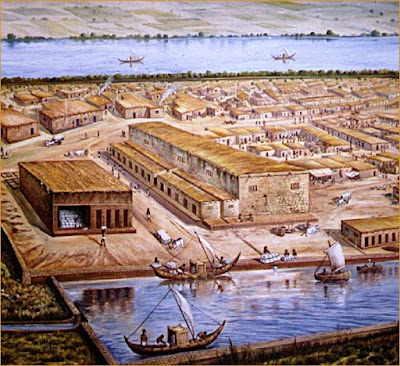
These cities like most in the
Indus Valley Civilization portrayed a clear indication of prior urban
planning with straight roads, elaborate drainage systems and strong
durable buildings houses.
Cities were made of backed or wood bricks. Bricks were made by
craftsmen who produced each brick of the same size. There was an
advanced water supply and sanitation system which provided a clean
environment for the community and with obvious hygiene benefits.
Dwellers in these cities had private toilets that connected to wider
public drains which used gravity to transport waste and were covered by
ornately laid bricks.
John Marshall at Mohenjo Daro
The sewer network emptied into the surrounding water courses and
cesspits that were regularly emptied and cleaned. Both Harappa and
Mohenjo Daro were fortified by large robust walls supposedly for the
protection from either invaders or wild animals. However, due to the
close proximity of rivers it is more likely that these walls were
designed for flood control.
Mohenjo Daro had two districts; the citadel evidently for the upper
class and the lower town for the ordinary citizens. Although, evidence
suggests, there was relative equality amongst citizens, as all of the
streets were well-drained, this keep the city dried and clean eventually
reducing the potential of disease.
One of the most unique features of the Indus Valley Civilization can
be found at Mohenjo Daro, historians and archaeologists named it the
“Great Bath” there is no true consensus between historians on the
purpose of this great bath but some historians have speculated it was
used for religious practices perhaps as a spiritual cleansing effect for
those that bathed in it the spiritual beliefs of the Indus Valley
Civilization remain inconclusive.
Great Bath at Mohenjo Daro
However, it is believed that they honored nature especially water
which has similarities with the present-day Hindu beliefs. The
population of these cities reached around 30,000 to 60,000 individuals
and during the civilizations peak the population subcontinent grew to
between four to six million people. This large population was sustained
by the Indus River Basin and subsequent biannual flooding.
The inhabitants of Dholavira (another site in Gujarat, India)
created a minimum of 16 reservoirs and developed a collection system
based on harvesting rainwater. This environment was perfect for farming
crops like wheat and barley providing a surplus of food that was stored
in granaries.
The most striking and interesting aspects of the Indus Valley
Civilization is economics. they are evidence that suggest that Indus
valley people had a trading relationship with Mesopotamia and ancient
Egypt. Artifacts have been uncovered of seals that were made from clay
or ceramics. However, these imprinted seals is not deciphered yet. These
seals often depicted images of animals, probably used as an
identification mark.
Who was the chief god of Indus Valley people?
One of the most famous seals is known as the Pashupati seal, it
depicts a man with a horned headdress surrounded by a buffalo and a
tiger along with elephants and deer; often debated by archaeologists and
historians that it may suggest the representation of the deity. Some
surmise that this seal is one of the earliest depictions of the Hindu
god Shiva, who was associated with yoga and regarded as a lord of
animals.
Pashupati Seal
Trade in Indus Vally Civilization
Indus Vally Civilization was trading beyond their region. There are
numerous seals found in Mesopotamia as early as 3500 BC. As a proof of
trade, Traders should keep the respective seals. Sumerian people called
the Indus Valley Civilization as Meluḫḫa. Cotton is most important
products for trade. However, other items like of jewellery and animals
were also exported.
Do you know, Indus originally derived from a word ‘sindus’ means
“cotton” in ancient culture. After many centuries, Indus word started to
use as “Hindus” for people residing in Indus river basin.
Trading Seals
What caused the downfall of this great
civilization is not clearly known. As no defined answer currently exist
but there are many theories, most research has concur that due to the
gradual decline, the demise was either due to the climate of the region
changing or that the river changed course as a result of tectonic
variation around 1800 BCE.
This weather changed leads to decreased
food production. Over this extended period of decline, many of the
population would have migrated to find more sustainable land for
farming. The trade began to disappear and great urban settlements were
gradually abandoned at around 1500 BC. Which eventually, leads to the
end of this magnificent culture.
How did Indus Valley civilization end?
This civilization will remain largely a mystery. We can speculate and
create an idea of their culture and society piecing together their way
of life. It is hoped that one day the mysteries and secrets of this
fascinating civilization will reveal themselves. But for now, we can
only piece together parts of the puzzle and speculate how and why this
great civilization rose and vanished.
There are very few places on the face of this planet, which fascinate us because of their sheer presence or existence. One such incredible enigma seen on the world map is the country of Egypt and even more incredible is the history of its civilization. Egypt is a large country located in the eastern part of the Sahara Desert in North Africa. The valley of the Nile is a narrow strip of fertile land stretching throughout the length of the country 600 miles from north to south. This vast country is bordered by deserts on the east-west as well as south. The Mediterranean Sea lies to the north of Egypt.
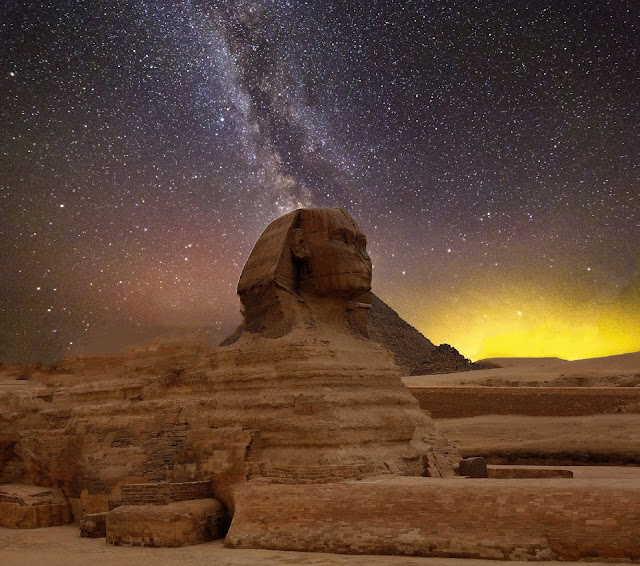
Great Pyramids
The deserts provided natural protection against foreign enemies and the early Egyptian settlers enjoyed many years of freedom from attack, during which they could build a society of their own. The river Nile was the lifeblood of ancient Egypt. Every year the river with unfailing predictability overflowed and deposited rich black soil along each Bank. This enabled farmers to raise two to three harvests each year. The Nile also provided water for irrigation and served as ancient Egypt's main transportation route. In 440 BC, the Greek historian Herodotus called Egypt the “Gift of the Nile”, an expression that people use till date.
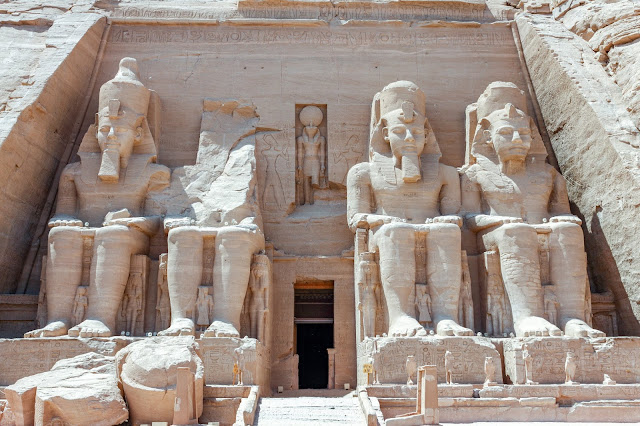
The growth of the ancient Egyptian civilization was sparked by the religious belief that the survival of the preserved dead body was a guarantee of life beyond death. It inspired the ancient Egyptians to build magnificent temples, tombs and monuments. Historians usually divide the history of ancient Egypt into three categories: the Old Kingdom 2686 to 2200 BC; the Middle Kingdom 2200 to 1800 BC; and the New Kingdom 1600 to 1100 BC. However, the earliest known settlers in ancient Egypt dated over 5000 years ago. By 3400 BC, the villagers became a part of two main kingdoms in Egypt; Lower Egypt in the Nile Valley Delta and Upper Egypt. (see map below in today's context)
Map (not to scale)
These two kingdoms were united in 3100 BC when King Menes of Upper Egypt conquered Lower Egypt and founded the national capital of Memphis.The "ways of Menes", a two feet high palette dates back to 3100 BC and is perhaps the earliest record of Egyptian hieroglyphic writing.
King Menes
It depicts the struggles of King Menes to conquer Lower Egypt where he is clubbing an enemy King. Menes also established the first Egyptian dynasty which followed a series of rulers in the same family. The reigning king was supposed to be the incarnation of the falcon-headed sky god Horus and hence divine. The Egyptian civilization thus began in 3100 BC.
King Menas's Dynasty rulers
The first national government was established, the ox driven plough was invented and a system of writing called hieroglyphics different from the Sumerian cuneiform developed. Hieroglyphic means sacred carving; it is called so because initially, the written language was used for religious work. Hieroglyphic system uses pictorial signs to represent ideas and sounds. Each sign represents an object or an associated idea or a word with a similar sound. The Egyptians also discovered a writing surface much superior to the clay tablets of Mesopotamia called papyrus. Papyrus is the origin of the english word 'paper'.
Papyrus Hieroglyphics
The papyrus plant was cut into strips of equal length and placed side by side. These were covered in cloth and pounded with heavy stones or mallets into smooth sheets. The papyrus was then polished to give a smooth flat surface on which scribes wrote an ink. Black ink was made by mixing soot and water and the colored ink from special colored powder. The Egyptians made Scrolls of their paper writing; however these scrolls were not as convenient to read as books. There were many different ways of writing hieroglyphs for instance they could be written from top to bottom, left to right or right to left.
If an animal faced right you read from right to left and if it faced left you read from left to right.
The Great Pyramid Mystery Has Finally Been "Solved"
The Great Pyramid of Giza one of the seven marvels of the old world is being visited by a huge number of travelers every year; to reach there, you only have to travel 50 miles from the center of Cairo city to find yourself thousands of years back in time, and you feel that its no wonder why, it has been the topic of debate and research for centuries. But the question remains that how was the Great Pyramid built or aliens involved in the process?
Good news is you don't have to wait for time-travel to be invented to find out the answer. The mystery has finally been solved. Lets learn who made the Pyramid of Giza as great as we know it and how they managed to do it. The Great Pyramid was built by thousands of ancient Egyptians, who carried huge blocks of limestone and granite to Giza. They built construction which was great indeed; The Pyramid of Khufu remained the tallest structure on earth made by humans for over 3,800 years. It was composed of 2.3 million stone blocks put together so precisely that a human hair could not pass through the adjoining blocks impressive huh?
Moreover the Great Pyramid was originally covered with highly polished limestone which reflected the sunlight and made it shine like a star. The light was so strong; it could be seen from the moon. Sadly the casing stones are no longer there because of an earthquake which happened in the 14th century. We can only imagine how beautiful it must have been. The pyramid was also unique because it had inner passages going both up and down unlike the other pyramids. What else makes it stand out it is the only eight sided pyramid in Egypt, it aligned with the stars in Orion's belt and pointed to the pole star alpha Draconis.
It is the most accurately aligned construction ever created facing true north. It is exactly at the center of the landmass of our planet. The parallels and meridians which cross the most land only meet in two places on earth, One of them is in the deep blue ocean and the other one is where the Great Pyramid is!!. What a great place to build something monumental isn't it?
All this proves how skilled the people must have been to be able to build it. Some scientists who lived centuries after them and some people today still refuse to believe the ancient civilizations were that smart and talented. So the Great Pyramid has given birth to many theories how and for what it constructed? You definitely heard some people believe it was done with the help of aliens. After all many great constructions on earth like Easter islands figures apparently looked too good or too genius for their time.
So, someone just decided they must have come from a different planet but there are more bizarre theories which have to do with the Great Pyramid. People in medieval Europe believed the pyramids were built to store grain. According to them, they were josephs greeneries described in the Old Testament. In 1859 a British publisher John Taylor concluded that the pyramid was in fact not built by aliens or the Egyptians but by Noah himself. Yes! the new who also built the ark. Taylor has done some major calculations and even come up with a special measurement term the pyramid inch, which according to him was nearly identical to the British inch.
An astronomer from Scotland named Charles was so inspired by Taylor's writings he did decide to do his own research. The results were published in 1864, as a book of six hundred and sixty-four pages; imagine the amount of time that research has taken him. Some scientists denied the holy origins of the pyramid altogether; in 1884 a paper was presented at a conference in Philadelphia; it said the pyramids were originally Hills. Those hills were used as quarries to get enough stone for edifices. As time passed the hills were cut into pyramids. Probably one of the most interesting theories of the pyramids construction involved levitation; not the “Win-gardium Leviosa” one used by Harry Potter and others in the magical world, but a different kind of levitation the one that has to do with the power of the human mind and sound vibration. Acoustic levitation helped stone blocks defy gravity and move over the ground believed the supporters of this theory.
Aliens, Noah, levitation what really helped to build the Great Pyramid? It remained a mystery for centuries but now it has been solved. New proof has been found to tell us how the Egyptians were able to transport, 2.5 ton blocks of limestone and granite for 500 miles to build the tomb of pharaoh Khufu in 2600 BC. Pharaoh did not spare money for the construction of the pyramids. They hired the best architects and engineers of the time to be in charge of the construction. Of course, they did not do the hard stone carrying work themselves and gave this task to an army of slaves. They had a hundred and seventy thousand tons of limestone to transport to the construction spot. How did they do it?
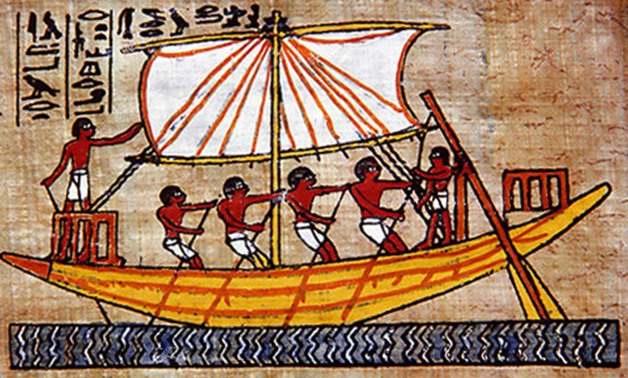
A 45 year-old scroll of paper is found in wadi al-jarf a red sea port has shed light on the mystery. It turned out to be the diary of mirror' an overseer of a team of elite workers written in the 27th year of Pharaoh and Khufu's reign. The diary which was more of a logbook described the construction process of the Great Pyramid with all the details we did not know before. According to this precious archaeological material, laborers transported limestone from Torah to Giza in wooden boats. In hieroglyphic letters mara described the daily lives of workers in the course of several months as they were busy with transportation. First they had to transform the landscape to divert water from the Nile and direct it to the Pyramid through artificial canals. Then they started transportation of limestone logs from Torah downstream to the construction spot.
The journey took around three days. Now the question is where did that clever system of waterworks go? It could not have disappeared with no trace at all. That is right; archeologists say they found evidence of it beneath the Giza Plateau, where the central canal was flowing. Seven boat pits have also been located around Khufu's pyramid - to the west and the east of it - between the queens pyramids and the remaining one beside the mortuary temple. More than that archaeologists managed to find ceremonial boats which give a good explanation of the ship's construction process. Now the secret of the Great Pyramid is no longer a mystery.
Its evident now that no aliens but hard work, limestone and wooden boats needed to create one of the wonders of the ancient world.